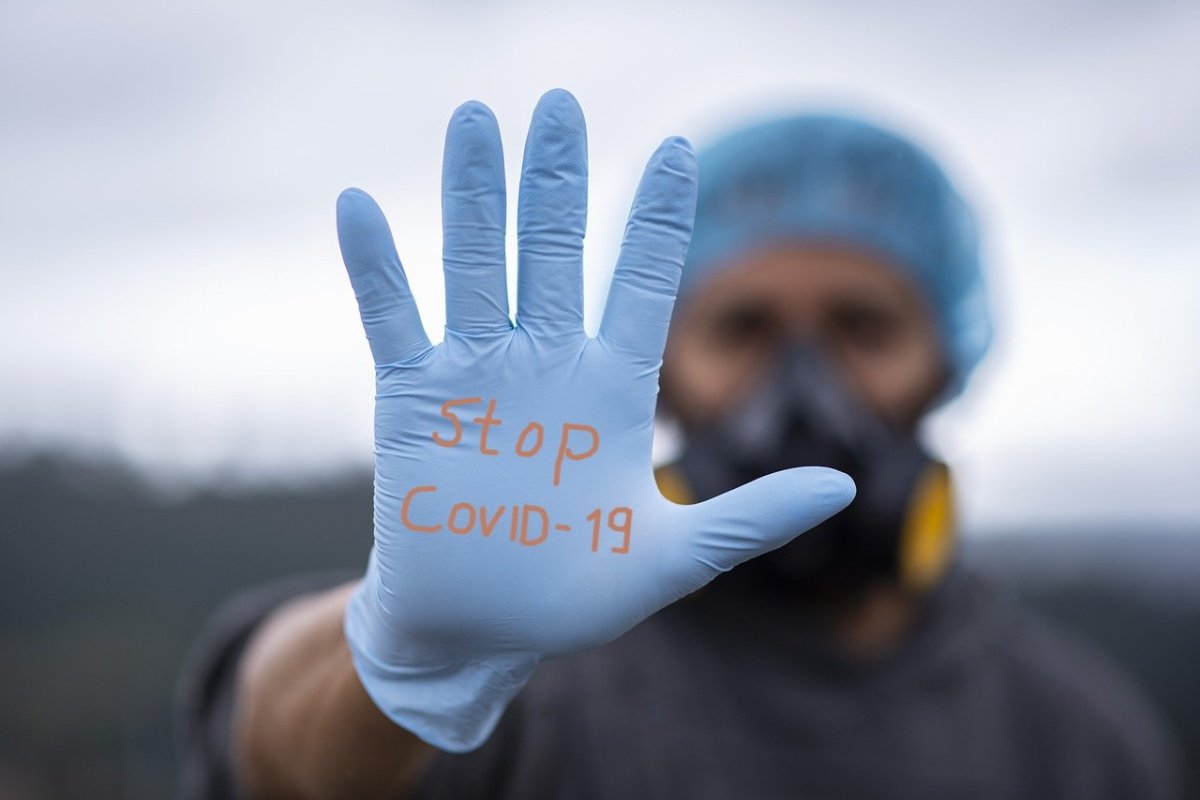
First Minister’s Covid update

Happy new year!

Firstly, we hope you all managed to avoid Covid and get a bit of rest over the festive period.  Here’s hoping the year ahead sees all our members getting the reward and recognition they deserve.

First Minister’s Covid update

We learned a number of things from the First Minister’s Covid update on Wednesday including:

  • 1 in 20 of us now have the virus
  • The number of people in hospital with COVID increased from 679 to 1,223 in the last week. That’s a rise of 80% and is putting significant additional pressure on the NHS.
  • No new protective measures were announced but there were a number of changes the requirements relating to self-isolation and testing (detailed below).
  • For those who have symptoms of COVID, the advice remains to book a PCR test, even if you have a positive lateral flow test.
  • The advice for everyone remains to test regularly with lateral flow devices, especially before meeting up with others.
  • Existing restrictions on large gatherings, the requirement for distancing between groups of people in public indoor places and for table service in hospitality venues serving alcohol on the premises will remain in force for now and, anticipated, until 17th January.
  • While it is not a legal requirement, the general public are strongly advised to limit contact with people in other households as far as possible, and to limit the number of households in any indoor gathering that does take place to a maximum of three.

Further information can be found here: https://www.gov.scot/publications/coronavirus-covid-19-update-first-ministers-statement-5-january-2022 

Self Isolation and Testing Changes

  • The first change to self isolation applies to those who test positive for COVID.  While the initial advice when someone tests positive will still be to self-isolate for 10 days, there will now be an option to end isolation after seven days as long as you, firstly, have no fever and, secondly, you record two negative lateral flow tests, one no earlier than day six after testing positive and another at least 24 hours after that.
  • The second change applies to close contacts of positive cases – and this includes household contacts – who are either under the age of 18 years, four months, or who are older than that and fully vaccinated.  [Fully vaccinated = those who have had first, second and booster/third doses].  For close contacts in these categories the requirement to self-isolate will end and be replaced by a requirement to take a lateral flow test every day for seven days. Obviously, if one of these tests is positive, self-isolation will then be required.  Anyone identified as a close contact who is over 18 years and four months and not fully vaccinated will still be asked to self-isolate for 10 days and to take a PCR test.
  • From today, if your lateral flow test is positive, and you do not have symptoms, you will no longer be required to take a PCR test to confirm the result.
  • Instead, you must immediately isolate and also report your result online so that Test & Protect can commence the contact tracing process and give you advice as quickly as possible. You will also receive an online form that you must fill in, as would happen with a PCR positive in to ensure your contacts are notified.

Updated Schools Guidance 

The school’s guidance has been updated and can be found here: https://www.gov.scot/publications/coronavirus-covid-19-guidance-on-reducing-the-risks-in-schools/pages/overview/  

The key changes are:

  • Updates to the self-isolation sections, to reflect the updated policy that will apply across wider society from today. There is also a Q&A attached which has been prepared by Test and Protect to answer any questions that may understandably arise given the changes being introduced. Please note that these changes mean the critical workers exemption policy that was recently introduced no longer applies; and
  • Updates to the vaccination section, to reflect the latest JCVI advice.
  • There is also a minor update to the section on outbreak management, to reflect the ongoing practice by local HPTs of prioritising engagement with higher risk settings where cases are very high (this can in practice sometimes mean, for example, that IMTs are not held for every school outbreak, with alternative handling arrangements agreed between HPTs, LAs and schools).

Note that all secondary school children are being asked to take a lateral flow test on the night before or morning of their first day back, and thereafter to test twice a week and also in advance of mixing socially with people from other households.  And the staff in all educational and early years settings should take a lateral flow test just before starting back at work, and in line with broader advice after that.

Further information on the changes and links to where you can get LFT tests can be found here: https://www.gov.scot/news/self-isolation-and-testing-changes/

Specific Guidance for Social Care Staff

See the updated Policy Framework to the self-isolation guidance for Health and Social Care Staff which apply from today.

We have been advised that the revised policy document sets out the conditions which will enable Health and Social Care staff who are COVID-19 index cases (confirmed as positive cases), or contacts of a positive COVID-19 case to exit isolation early in line with updated guidance for the general population. As their roles provide care and support to individuals who are often more vulnerable and at higher risk of COVID-19 infection, there will continue to be additional safeguards in place for health and social care workers including testing regimes, Infection Prevention and Control and personal protective equipment.

An additional information document for frequently asked questions for health and social care staff will be published next week and updating relevant web pages will ensure information is up to date in response to the Omicron variant. 

Funding allocation for local authorities

Details have now been published of how the Scottish Government funding for 2022/23 will be distributed to local authorities – you can see your local authority’s allocation here: https://www.gov.scot/news/funding-of-gbp-12-5-billion-for-local-councils 

Temporary change to fit note UK requirements

The Statutory Sick Pay (Medical Evidence) Regulations 2021 (https://www.legislation.gov.uk/uksi/2021/1453/made) came into force on 17 December 2021 and modified the existing regulations. The UK Government guidance about this change explains that “these changes are to give GP’s more time to work on the Coronavirus (Covid-19) booster programme”.

As a result of this modification, employees are not required to provide a fit note for the first 28 days of any spell of incapacity for work. This means self-certification for illness-related time off work (sick leave) has been extended from 7 days to 28 days.

As UK law takes precedence over a requirement in a collective agreement, employment contract or employer policy the effect of this is that the relevant provisions in our national agreements cannot be applied for the duration these regulations remain in force.

• In the SJC agreement the relevant paragraph is: 10.1.2 (iii).

• The Chief Officials agreement simply states that statutory notification requirements must be met and so does not contradict the new regulations.

Where terms and conditions, contracts, or policies state that a fit note is required after 7 days of absence the temporary requirement is now after 28 days.

The regulations are due to expire on 26 January 2022. The SJC will continue to monitor this and update national agreements as required.

More information can be found here: https://www.gov.uk/government/publications/the-fit-note-a-guide-for-patients-and-employees

Where’s the righteous anger?

In case you missed it over the holidays you might be interested in this article by Brian Wilson on the state of local government funding:

https://www.scotsman.com/news/opinion/columnists/nicola-sturgeons-cuts-to-councils-are-like-margaret-thatchers-in-the-1980s-where-is-the-righteous-anger-brian-wilson-3511785

Annual General Meetings

The Annual General Meetings (AGM) of the UNISON Stirling Branch of UNISON will be held online as follows: –

Wednesday 23rd February 2022, 12-2p.m

The meeting will be held virtually via video conference on Teams. The link for the AGM will be sent to members that have confirmed attendance by no later than Tuesday 22ndFebruary 2022 along with the relevant papers. In order to ensure the meeting can comply with UNISON national guidance, we request that you confirm by email that you will be attending the AGM.

Please reply by email to The Branch Secretary, Lorraine Thomson, thomsonl34s@stirling.gov.uk to confirm attendance and include your; name, workplace and current e-mail. AGM papers will be attached to the Teams video link once attendance is confirmed the day before the AGM. Should any member not attending the AGM wish a copy of the AGM papers please e-mail the branch directly.

Please reply as early as possible, to allow us to send out the relevant papers and your link to the meeting. You will receive the papers the day before the AGM.

If you wish to attend the AGM but do not have access to a computer, or have an access requirement, then please get in touch at the address below and we will do our utmost to facilitate your participation in the meeting by arranging an additional teleconference AGM for you.

If you have any motions/items for the Annual General Meeting please submit them to the branch by the 16th February 2022 for inclusion within the Final Agenda.

We look forward to seeing you at the AGM. Should you have any questions regarding the AGM please contact me at thomsonl34s@stirling.gov.uk or tel 01786 233 093.

For more info please visit www.stirlingunison.co.uk or follow our UNISON Stirling Facebook page and Twitter account to stay up to date on our AGM, the pay campaign and all other branch business.

Vaccination update

Jason Leitch​ joined the COSLA briefing last week. He emphasised the fact that double vaccination + booster remain the best protection against the spread of Covid-19, particularly given the increased transmissibility of the Omicron variant. 

He made clear that they are still learning about the level of severity of Omicron.  Whatever the level of severity is though it’s certainly not so different that we’d see a sufficient enough reduction to hospital admissions to allow any relaxation of mitigations so all precautions should be followed.  

He said that the increased transmissibility and consequential isolations will have a significant impact on the number of people attending work. They are currently looking at absence (through people having Covid or isolating in line with government guidance) modelling in local government which is indicating that up to 25% of the LG workforce could be off work in the coming weeks.  They stated that they would be surprised if in a fortnights time local government will be able to provide anything but critical services. 

Exemptions

In light of this local authorities have been asked to draw up a list of critically important roles for consideration for isolation exemptions. These lists must be discussed with trade unions and local public health teams – they should not be blanket exemptions but focussed on roles specifically delivering critical services.  We will keep you updated regarding this.

Booster uptake​ 

amongst social care workers remains lower than other frontline workers so please ensure any local issues presenting difficulties in staff being able to get their booster are raised with management. 

Vaccine uptake

there continues to be concern about the low number of pregnant women taking their vaccine, such that they have been added to the list of clinically vulnerable.  Guidance has been updated for pregnant women and can be found here: https://www.gov.uk/government/news/pregnant-women-urged-to-come-forward-for-covid-19-vaccination

Risk assessments

​ should be actively reviewed by every employer – please check if this has been done and if not please ask that they are.  It is not enough for an employer simply to say that they drafted a generic risk assessment several months ago and that it remains relevant.  They need to go back over them all in light of changed and strengthened mitigations.  

We raised concerns about the impact of tightened mitigations, isolation, the continued uncertainty and concern on the mental health​ of workers.  It was agreed that there will be a refresh of the ‘Don’t stay on mute’ campaign that we worked on jointly with the employer earlier in the year.  We will share this when complete.

Ventilation Guidance​ 

CoSLA has put together some good practice on ventilation which you can find here:

Safer Workplaces Guidance 

The safer workplace guidance has been updated in line with the increased levels of protection required for Omicron.  All employers should be following this.  You can find the up to date guidance here:

https://www.gov.scot/publications/coronavirus-covid-19-general-guidance-for-safer-workplaces/pages/travel-and-transport/

Long Covid – SJC Collective Agreement

Please see attached SJC-68 – the collective agreement reached on Long Covid.  It is important to stress that this outlines the bare minimum we would expect local authorities to be implementing in relation to this – they can and should be encouraged to do more. 

Review of Regional Improvement Collaboratives

The Scottish Government has published an evaluation of the operation of Regional Improvement Collaboratives which you can find here:  https://www.gov.scot/publications/review-regional-improvement-collaboratives/

Thank you

This, you will be pleased to read, will be the last LG update from us this year. It has been another challenging year in local government but, whilst we might not have been able to deliver everything we would have wished, we have made real progress in many areas and have protected members in ways they will never know.  Lives have been saved and members are better off because of the hard work all of you have done this year.  I know it has not been easy but it is appreciated. Thank you.  I hope you manage to get a bit of a rest over the festive season.

We hope this is helpful.

Best wishes for 2022

UNISON International Relations Newsletter

The UNISON International Relations Newsletter provides updates on UNISON’s international work, reports on international matters affecting workers and trade unionists, and keeps BIROs informed of related developments, publications of reports and briefing documents, as well as upcoming nationwide events relevant to the union’s international work.

Talking about Palestinian rights:

A UNISON guide for activists This new briefing aims to provide activists with a better understanding of the situation in the occupied Palestinian territory, with a particular emphasis on human and workers’ rights and public services. It provides a background to UNISON’s policy on Palestine and the key information activists need to discuss the situation and campaign from a public service trade union perspective.

Download the ‘Talking about Palestinian rights’ briefing  

Save the Date: UNISON International Seminar 2022

UNISON’s International Seminar will take place from Friday 25 March to Sunday 27 March 2022 at UNISON Croyde Bay in Devon. The seminar will help branch international relations officers (BIROs) gain a better understanding of UNISON’s international policies and how to implement them in the branches. They will also learn more about the role of the BIRO.

We will send you further details when registration for the seminar opens in January.  

Turkey: Send a solidarity message to Gonul Erden

Gonul Erden is the former president of the Turkish health workers union SES. She was arrested on 25 May along with seven other current and former leaders of the union for alleged membership and leadership of a terrorist organisation. The eight accused were initially released on bail, but Gonul was rearrested and returned to prison after the prosecutor appealed the decision. Trade unionists in Turkey are regularly arrested and accused of terrorist offences for defending workers’ rights.

Gonul is a great friend of UNISON and was a guest at our national delegate conference in 2018. We know that messages of solidarity from UNISON branches to Gonul will mean a great deal to her whilst she is in prison. Please send your message to i.relations@unison.co.uk and we will forward it on to our colleagues in Turkey.  

Palestine Webinar Solidarity with MAAN members at Ta’aman Foods

Monday, 20 December 2021, 4.30pm Hear from MAAN leaders and members of the Ta’aman workers committee about the  struggle of Palestinian workers at Ta’aman Foods, located in the industrial zone of the Mishor Adumim in the occupied West Bank.

Join the webinar at 4.30pm on Monday, 20 December.

Read more about the recent strike and MAAN’s work to organise Palestinian workers in the settlements, which is supported by the UNISON International Development Fund.  

Electronics Watch Webinars

Electronics Watch, with the influence and support of UNISON, has committed to do much more to focus on and build its capacity to support electronics workers to form and join trade unions of their choosing and to collectively bargain better pay, terms and conditions with their employers.  And with their innovative public sector affiliation model that uses the power of public buying to influence anti-union employers you really can make a difference through your workplace by encouraging your employer to affiliate to Electronics Watch. 

Between all the seasonal (hopeful) celebrations, why not listen to these excellent Electronics Watch webinars to understand more about the power of public procurement.  We recommend them in this order: Freedom of Association, Climate Justice and Modern Slavery What is Freedom of Association, challenges to organising in global supply chains How to remedy violations of Freedom of Association For those who really find this fascinating, two other webinars exist on the YouTube site focused on these issues, along with many others. 

We really hope this inspires you to encourage your branch to raise this with your employer. For support to do this, please contact i.relations@unison.co.uk.    

UNISON’s International Affiliations: Palestine Solidarity Campaign  

PSC is the largest movement in the UK campaigning for Palestinian rights.  For many years PSC has worked closely with UNISON to further our work.

UNISON’s NEC international committee encourages all branches to affiliate to PSC and support their vital work, campaigning for Palestinian rights and an end to the occupation. Affiliation costs just £25 and you will receive campaign information, resources and can have a say in the direction of the organisation at the PSC AGM.  

Scottish Government Budget 2022/23

The Scottish Government announced their proposed budget on 9th Dec. This briefing outlines some of its key features as the impact on UNISON Scotland members based on currently available information. Further briefings will be produced as the Budget process continues.

Introduction

The core block grant received by the Scottish Government for this budget was larger than any pre-pandemic budget ( 8% higher in real terms than 2019/20)  but lower than in either of the past two years. They, therefore, have more money to spend but the picture is complicated as there are still ongoing Covid challenges to be met. This was “a budget of choices” as Kate Forbes put it. The choice was made to prioritise Scottish Government’s favoured policies and initiatives, where spending increases, sometimes considerably. Other services received either standstill funding, or real terms – or in the case of local government actual – cuts in cash available. Improving public service pay does not seem a priority. Due to their deal with the Scottish Greens, the Scottish Government does not have to negotiate with other parties to ensure the budget will pass.

Personal Taxation

Income tax rates and bands are unchanged. The Scottish Government imposed Council Tax freeze is lifted. Given councils are facing massive shortfalls (see below) increases are likely..

Pay policy

Scottish Government pay policy applies directly to members in NDPB’s but will also provide the backdrop to other negotiations. The proposal is for a £10.50ph minimum wage rate. Other increases are to be lump sums rather than %ages: £775 for those earning up to £25k. £700 for those between £25-£40k. £500 for those on £40k+. This is below inflation for the bulk of UNISON members. RPI is currently at 3.3%) on the year – and OBR prediction is for inflation to reach 4.4% next year. Work towards a 35hr week is to continue but no targets are set or finance promised

Local Government

The local Government faces an almost 9% cut in revenue budget which will make service delivery challenges. The Scottish Government argue that this is compensated for by the money councils get to carry out Scottish Govt policies from other budgets eg education and social care. Cosla disagrees estimating this budget means a £264m (2.5%) cut, rather than the significant increase needed following years of poor settlements. Councils have a free hand to raise Council Tax for the first time since 2008/9 – to replace lost revenue funding would though involve eye-watering increases.

Health

Health Board spending goes above £14bn. Overall this is a 5.6% increase with most territorial boards getting ~4.5%, with the ambulance service (7.8%) and national waiting times centre (11.8%) doing better).  Many services receive a flat rate or no increases but there are big increases in social care and mental health improvement. Some training budgets are increased significantly. 

Further and Higher Education

There is a below-inflation increase in HE resource funding of 2.7%. Specific priorities & projects (eg counselling, climate action) receive earmarked funding. Resource funding for Further Education remains at this year’s level. Scot Gov estimates that other sources of funding will deliver £190m. There is a doubling to ~£70m in capital expenditure budget for colleges. The headline budget for Skills Development Scotland declines by £5.8m claim is that this is compensated for by funding presented through programmes attached to the Finance and Economy portfolio.

Police and Fire

Scottish Police Authority budget increases by 3.2% which the Scottish Government claims will involve a real-terms resource increase. The police budget includes £29m for reform.   SFRS budget increases by 3.1%. £73.7m is allocated for funding the UK-wide Emergency Services Mobile Communications Programme (ESMCP) for the three Scottish Emergencies Services.

Economic recovery

The Scottish Government continues to see economic recovery from covid as being business-led rather than driven by investment in services. emphasis is on infrastructure projects, with learning and skills policies tailored to fit. Community wealth-building ideas through an empowered public sector despite ministerial rhetoric, don’t feature much.

Conclusion.

The difference in treatment between the government’s favoured initiatives and other services (and those who provide them) is clear favoured programmes get significant spending boosts, others get flat funding. Pay policy reflects this. More than ever local government is treated as being merely a delivery arm for Scottish Government policies. 

First Minister Statement today

The First Minister made a statement on the impact of the Omicron variant today. Key points were:

  • Omicron is significantly more transmissible than other variants of Covid-19.
  • We still do not yet know for certain whether it is any milder than other variants.
  • We are now in a race between the virus and the vaccine – additional resources will be put into vaccine and booster roll-out in the coming weeks.
  • Those between 18-29yrs will be able to book their booster from tomorrow.  Those above that age should either have already their booster or already be able to book.
  • Further protective measures to slow the spread of the virus will be brought in incl extending the workplace testing scheme, measures to avoid crowding, emphasis on social distancing, collection of data by businesses for the purpose of tract and trace, ensuring all who can work from home do so, reinforcing the rules around the use of face coverings and additional guidance on minimising contact with others.
  • There is an additional £100 million to ensure the Self Isolation Support Grant is available for those who need it, given the expected increase in the number of eligible people who will be asked to isolate.
  • New guidance for Schools for the return after the Christmas break is being looked at now and they expect to be able to issue by the end of this week.
  • They will limit the number of people who can visit those in care homes and advise the use of testing prior to visits being undertaken.

For full details of the First Minister’s announcement see here:

https://www.gov.scot/publications/coronavirus-covid-19-update-first-ministers-statement-14-december-2021

Omicron Evidence Paper

For more information on the rise and implications of the Omicron variant please see the Scottish Government Evidence Paper.

New Guidance on Isolation for those working in Social Care

The Scottish Government has updated the above guidance, through correspondence sent to Health Boards, HSCPs and Councils.  

We have attached the relevant letter sent by Donna Bell.  The change relates to the Covid booster status of workers that would allow them to be exempted from self-isolation requirements.

We also attach a similar letter that has been issued today to local authorities re school staff.